I really enjoyed reading your post! Your hamster story is such a vivid example of how curiosity and personal interest can completely transform a studentâs engagement and learning. It reminded me of my own experience, my teacher noticed that I loved space especially mercury and itâs retrograde, and she used that interest to make lessons more engaging across different subjects. I love how you connected your story to constructivism, showing that prior knowledge and familiarity with a topic can make learning more meaningful and memorable. It really highlights the power of teachers noticing and building on studentsâ interests.
Your reflection on growth mindset also resonated with me. Shifting frustration into appreciation for challenge is such an important perspective and modeling that for students helps them develop resilience and confidence. I also appreciated your connection to the ARCS model, particularly how relevance and satisfaction strengthen motivation. Your example of applying prior hospitality skills to classroom management was a great reminder that past experiences can shape how we approach new learning.
How do you usually discover or encourage studentsâ personal interests so that you can connect lessons to their curiosity, like your teacher did with you?
Itâs inspiring to read about how your journey in biology led you to teaching and how deeply your experiences in the Cowichan Valley shaped your perspective. I really resonate with your point about lifelong learning and how our prior knowledge both helps and challenges us as adult learners. Iâve noticed the same in my own teaching and learning. Drawing on past experiences can make new concepts more accessible, but it also takes conscious effort to reshape old assumptions when approaching something differently.
I also love how you integrate constructivist principles and relevance into your lessons, like using the nature park and plant knowledge cards. That hands-on approach not only engages students but clearly connects learning to real life, which seems so aligned with the way you describe motivation and the ARCS model. Iâve found that when students can see the âwhyâ behind what theyâre learning, they invest more effort and curiosity.
Your use of design thinking is another element I find interesting. The way you empathize with students, prototype solutions and reflect on what works mirrors how I try to approach lessons. Iâm curious, have you found any particular strategies for balancing student autonomy with the need to scaffold learning, especially when exploring open-ended projects like the ecosystem work?
I really enjoyed reading your post and learning about your journey! I can relate to how visual learning and talking things through with others helps solidify understanding. I often grasp concepts faster when I can discuss and see them in action too. Your story about navigating the bus and train system in France stood out to me. I love how you combined trial and error with asking for guidance from friends to learn effectively, itâs such a practical example of experiential learning.
I also appreciated your reflection on âstreet smartsâ versus âbook smartsâ and how your perspective on learning has grown. I wonder, now that youâve navigated learning in a completely different country, do you find that you approach challenges or learning new systems differently back here in Canada? Also, do you think your visual learning style has helped you adapt more quickly in new environments?
Through my teaching, I have realized that when I clearly envision what students should understand or be able to do by the end of a lesson, it transforms the way I approach teaching. Wiggins and McTigheâs concept of backward design resonates strongly here: starting with the desired outcomes allows me to work backwards in structuring meaningful activities.
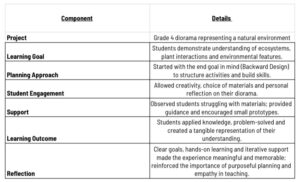
When I planned a grade 4 diorama project last spring on natural environments, I began by imagining what a successful final product would look like and how students could demonstrate their understanding of ecosystems. This clarity gave direction to the entire project. I was able to scaffold activities that gradually built knowledge of habitats and ecological interactions, while still leaving space for studentsâ creativity and personal expression. Students experimented with materials, made choices about which natural elements to include, and reflected on how their dioramas represented ecosystems. The process reinforced for me how powerful it is to start with the âwhyâ of learning, helping students find purpose in their work and making lessons both engaging and meaningful.
Table of the grade 4 diorama project (why it connects)
Empathy, Iteration, and the Spiral of Learning
Another insight I gained was the role of empathy and iteration in learning design. Kolbâs experiential learning cycle emphasizes that knowledge is created through a process of experience, reflection, and adjustment, which Iâve seen in action with my students. Some initially struggled with selecting materials or identifying ecological characteristics of their chosen environments. By observing closely, asking guiding questions, and encouraging them to create small prototypes, I could see where support was needed and adjust my approach accordingly.
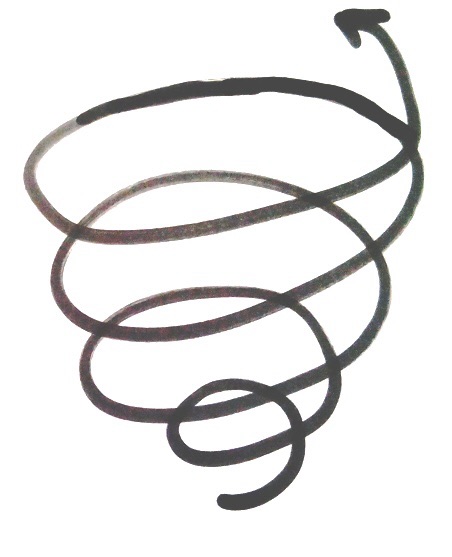
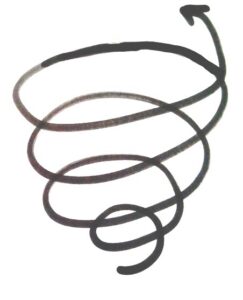
This iterative process reminded me of the spiral model of learning. Unlike a flat line or simple repetition, the spiral emphasizes moving deeper with each iteration, connecting prior knowledge to new applications. Each time students revised their diorama, they werenât just repeating tasks, they were layering new insights onto their earlier understanding. This spiral of reflection and refinement created a safe, low-stakes environment for problem-solving, where students felt supported but not constrained. It reminded me that learning is rarely linear, it involves trial and error, reflection and growth.
Reflecting on my own learning experiences also underscored the difference between surface-level and deep learning. In one math unit, I memorized formulas for area, perimeter and volume, which allowed me to perform well in the short term but left me without lasting understanding. In contrast, a project where I had to design a classroom layout and calculate space needs required me to apply mathematical concepts in a real-world context.
This connects directly to Wrightâs TEDx Talk, where she emphasizes that early experiences and active engagement shape lifelong learning. When I worked on the classroom design, I wasnât just memorizing formulas, I was actively exploring and problem-solving, much like the meaningful, hands-on experiences Wright describes. Both examples highlight that learning is most impactful when it is relevant, engaging and allows learners to construct knowledge themselves rather than passively absorb information.
Designing for Relevance and Inclusion
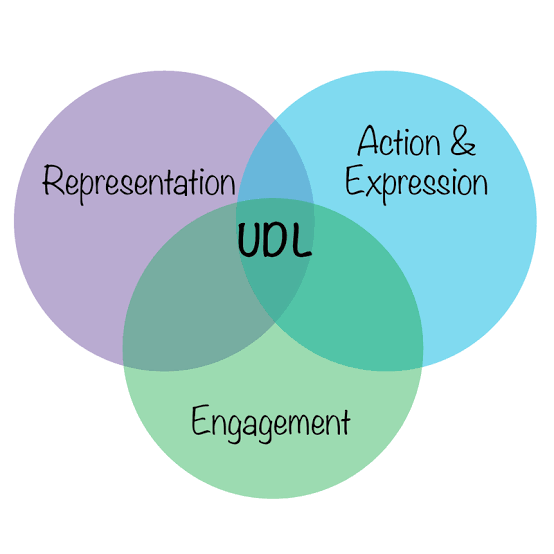
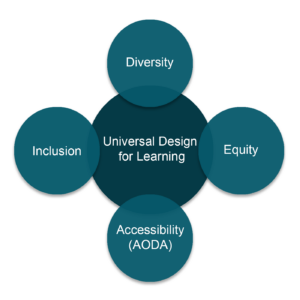
This also connects to my teaching philosophy: I want students not only to acquire knowledge but to see how they can use it to make sense of and positively impact the world around them. Universal Design for Learning (UDL) reminds me to plan with flexibility in mind so that every student can access and engage with the content in meaningful ways.
When lessons are designed with clear outcomes, authentic contexts, opportunities for iteration and a spiral approach that deepens understanding over time, they become more than just tasks, they become experiences. These experiences foster curiosity, ownership and deeper connections between classroom learning and everyday life.
Moving Forward
Overall, this module reinforced that intentional planning, empathy, iteration and relevance are central to designing meaningful learning. Designing experiences that are student-centered, hands-on and aligned with clear outcomes allows students to engage deeply, take ownership of their learning, and connect classroom concepts to real-world applications. Like the spiral, my teaching will continue to build on prior experiences, moving deeper with each iteration to create lessons that are purposeful and memorable.
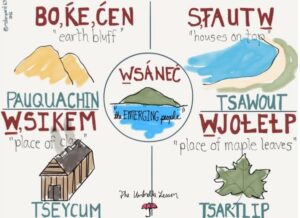
Hello everyone! My name is Anna McClintock, and I recently graduated from the University of Victoria with my Bachelor of Education in Elementary Curriculum this past June. Since then, I have been working as a Teaching Teacher on Call (TTOC) in School District 63 on WSANEC territory. I feel so grateful to be able to live, learn and teach on these lands, itâs a place I truly love and consider my home.
Image credit: Saanich Schools Website
WSANEC territory made up of TSEYCUM, TSARTLIP, TSAWOUT AND PAUQUACHIN first nations.
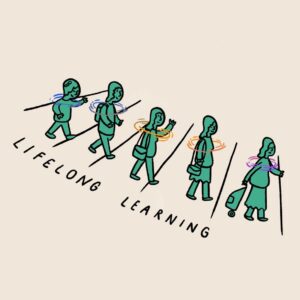
Alongside teaching, I have returned to UVic to upgrade from a category 4 to a category 5. Balancing these two roles has been both challenging and rewarding, as it allows me to deepen my professional experience in the classroom while simultaneously engaging with new learning opportunities at the university. This is just the beginning of my journey as a lifelong learner. This course feels like a natural fit because of my strong interest in how social media and technology intersect with education. I see these tools playing a significant role not only in my personal life but also in the lives of my students, shaping the ways they communicate, collaborate, and engage with learning.
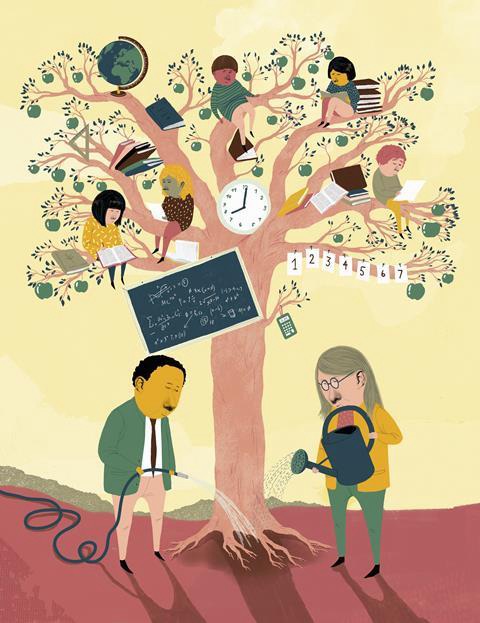
Image credit: âSee what you meanâ via Pinterest
For me, learning is most effective when it builds understanding through meaningful connections and hands-on experiences. One of the most memorable and impactful learning experiences Iâve had took place during my practicum. I designed a lesson that linked art and science, where students created dioramas of their personal âhappy placesâ in nature. Seeing students engage with the lesson and reflect on their own experiences while learning scientific concepts made me realize how deeply learning can resonate when it connects to something meaningful. I learned alongside them, discovering that teaching is not just about delivering content, itâs about fostering curiosity, supporting creativity and helping students see themselves reflected in their learning.
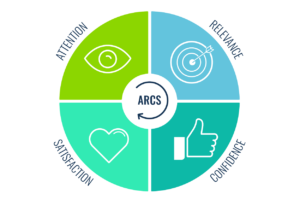
In terms of my learning philosophy, I find myself most aligned with constructivist approaches. I learn best when I can actively engage with new ideas, connect them to prior knowledge and apply them in practical, hands-on ways. Iâve noticed that motivation plays a critical role in this process for me and one concept from the ARCS model that resonates deeply is relevance. When I can clearly see why a concept or skill matters, whether for my growth as a teacher, for my studentsâ learning or for my own personal development, I feel far more engaged and inspired to invest effort into understanding it. This focus on relevance mirrors a TED Talk I recently watched by Priyam Baruah, which emphasized personalized learning and creating supportive educational environments. Baruah discusses the importance of motivation and excitement in learning and how teachers can implement strategies that allow every student to feel seen, valued, and capable.
A TedXTalk on personalized learning.
I also view my prior knowledge as a key tool in approaching new learning. Experiences in classrooms with Universal Design for Learning (UDL) have provided me with a strong foundation that allows me to connect new course content to strategies I have already implemented. This grounding makes learning feel concrete, practical and exciting rather than abstract. It gives me confidence to experiment with new ideas while remaining anchored in tried-and-true teaching practices.
Overall, Iâm eager to explore these themes further this term, examining how technology, motivation and meaningful connections can intersect to create more engaging learning experiences.
Image credit: Growth Engineering via Google
ARCS Model: Attention, Relevance, Satisfaction and Confidence
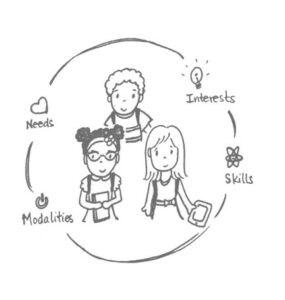
When I think about personalized learning, I see it as education that adapts to the learner rather than the other way around. Itâs not just about choosing topics weâre interested in, but also about having flexibility in pace, style and tools so we can connect with content in ways that feel meaningful. Personalized learning makes room for the learnerâs voice, and for me, that has often been the difference between simply completing an assignment and truly engaging with it.
When I first learned about personalized learning I was introduced to this video by TedXTalk.
A time that stands out for me was during my teacher education program here at UVic. In one of our courses, we were given the option to design our final project using any medium we felt best represented our learning, ie. essays, presentations, artwork or even podcasts. I chose to create a gallery walkâstyle project that showcased my learning through text, teachings, discussions and interactive elements. Instead of writing a single long paper, I designed small stations where people could move through and experience different parts of the material. This format felt authentic to me because it combined creativity, collaboration and academic depth. It also mirrored the way I enjoy learning: engaging with ideas actively, from multiple angles, rather than passively consuming information. The freedom to approach the project this way not only deepened my understanding but also gave me a sense of ownership and pride in my work.
Social media has also shaped my learning in important ways, especially outside formal classrooms. Platforms like Instagram and TikTok have been surprising but powerful tools. Iâve found teaching strategies, classroom organization tips and lesson ideas from educators around the world. What works well is the immediacy, I can see real classrooms in action, hear first-hand experiences and adapt ideas to my own practice almost instantly. Thereâs also a sense of connection in realizing that other educators, even those in very different contexts, are grappling with the same questions and challenges that I am.
Image credit: Mungfali.com via Pinterest
At the same time, Iâve noticed the challenges that come with this kind of learning. Social media tends to show curated highlights, not the everyday struggles behind them. Itâs easy to slip into comparison or self-doubt when I forget that what Iâm seeing is a polished version of reality. That tension, between inspiration and unrealistic expectations, is something I still navigate.
For me, both personalized learning and social media connect back to the course theme of networked learning. They remind me that learning doesnât happen in isolation, it grows through choice, community and connection. As I continue this course, I want to explore how to bring that same sense of personalization and connectedness into my own teaching practice.
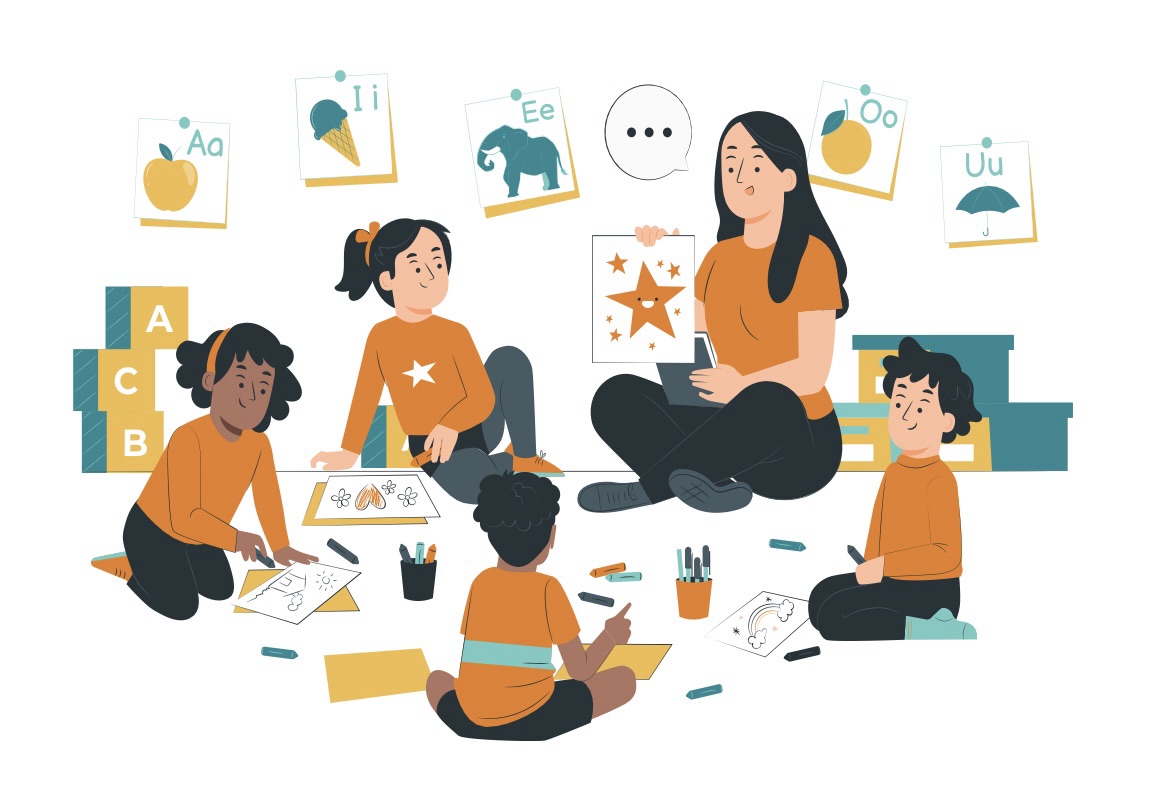
Image credit: Getting Smart via GoogleImages
Inquiry-based and personalized learning gives students a role in directing their own learning and enables them to grow and become independent.